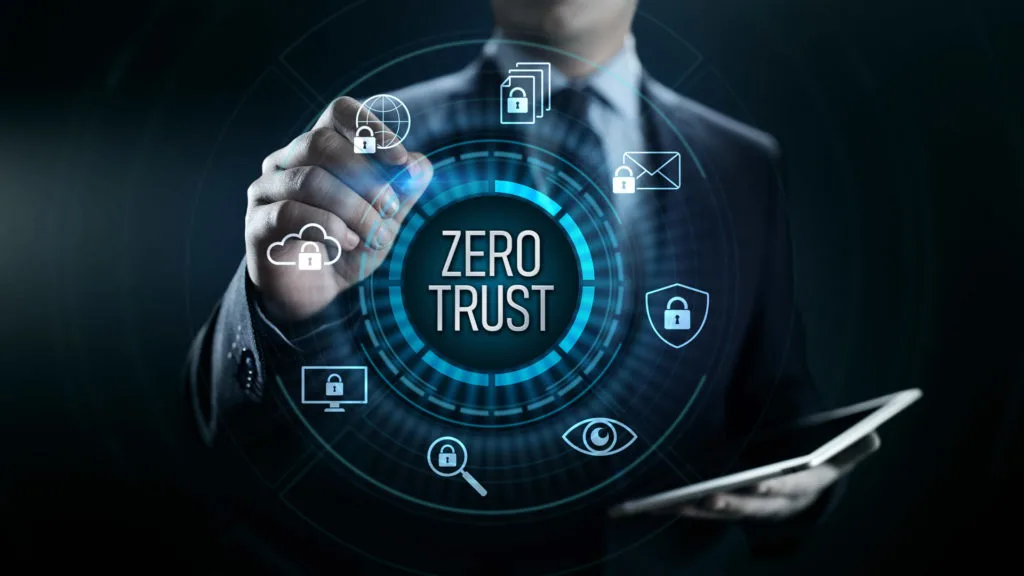
Zero Trust is a cybersecurity model built on a simple idea. No user, device, application, network, or system should be trusted automatically. Every access request must be checked, approved, and limited to what is needed for that specific task.
In older security models, many organizations treated the internal network like a trusted office building. Once someone got through the front door, they could often move around with fewer checks. Zero Trust changes that. It treats every door inside the building as important. A person may enter the lobby, but they still need the right identity, device status, role, and reason to open the finance archive, customer database, payroll system, or cloud dashboard.
NIST describes Zero Trust as a shift away from static, network-based perimeters toward security that focuses on users, assets, and resources. It also states that Zero Trust does not grant implicit trust based only on where a user or asset is located, or whether the device is owned by the organization. Authentication and authorization happen before a session to an enterprise resource is created.
What is Zero Trust?
Zero Trust is a way of designing security around verification rather than assumption. It does not mean that nobody is trusted in a human sense. It means that systems should not grant access just because a request comes from a familiar network, a company laptop, or a user who signed in once that morning.
A Zero Trust system asks practical questions every time access is requested.
Who is asking?
Is the identity strong enough?
Is the device healthy?
Does the application have the necessary permissions to perform this action?
What data is being requested?
Does the request match normal behavior?
What is the smallest amount of access needed?
This matters because modern organizations no longer have one clean perimeter. Employees work from home, offices, airports, partner sites, mobile phones, managed laptops, personal devices, and shared cloud services. Applications may run in a private data center, a public cloud, a software as a service platform, or several places at once.
Zero Trust protects resources, not just network segments. The resource might be a database, a payment approval tool, a biometric identity verification service, a document repository, an API, a payroll file, a border control platform, or a national ID record. The question is no longer only where the traffic comes from. The stronger question is whether that exact request should be allowed right now.
How does Zero Trust work?
Zero Trust works by combining identity, access control, device checks, data protection, monitoring, and policy enforcement. It is not one product. It is an architecture.
A simple Zero Trust flow looks like this:
A user or service requests access to a resource.
The system checks identity, role, device health, location, risk signals, and the sensitivity of the requested resource.
A policy engine decides whether the request should be allowed, denied, limited, or sent for extra verification.
Access is granted for a specific session or action.
The session is monitored, and access can change when risk changes.
The National Cyber Security Centre explains that each request should be verified against an access policy, and that Zero Trust removes inherent trust from the network. It also recommends using multiple signals, including user identity, device health, device location, and user status, when evaluating access requests.
A policy can be strict without being clumsy. A low risk user reading a public internal announcement may pass with normal sign in. A finance administrator approving a high value transfer may need a phishing resistant authenticator, a healthy managed device, a known location, and biometric authentication. A developer accessing production systems may need privileged access approval that expires quickly. A patient opening a health app may need identity verification before viewing sensitive records.
Zero Trust is dynamic. The same person may receive different access decisions depending on context. A login from a managed office laptop in Bratislava at 9 AM may be treated differently from a login from an unknown device in another country at 3 AM. The user may be the same, but the risk is not.
Why is Zero Trust Important for Security?
Zero Trust reduces the damage that can happen when one control fails. Passwords get stolen. Devices get infected. Internal systems get misconfigured. Staff make mistakes. Attackers sometimes get inside a network through phishing, malware, leaked credentials, weak remote access, or vulnerable software.
Zero Trust does not promise perfect security. No serious security model should.
It limits blind trust.
Narrows access.
It improves visibility.
Makes attackers prove identity, device trust, and authorization again and again.
That creates more chances to stop abuse before it spreads.
This is why Zero Trust has become important for banks, telcos, healthcare providers, governments, digital platforms, airports, cloud service providers, and enterprises with remote work. These organizations manage sensitive data and high-value services. They need users to move quickly, but they also need strong control over who can access what.
What are the Main Zero Trust Principles?
Zero Trust starts with knowing what exists. An organization needs a clear view of users, devices, services, applications, workloads, data, and business processes. Without that, policies are guesswork.
The next principle is strong identity. Every user, device, and service should be uniquely identifiable. Identity is one of the most important factors in deciding whether someone or something should be given access to data or services.
Access should follow least privilege. A user receives only the permissions needed for a job. A service receives only the permissions needed for its function. Privileged access should be narrow, monitored, and time limited.
Security checks should use multiple signals. Identity matters, but it is not enough. Device health, user behavior, location, session risk, application sensitivity, data classification, and threat intelligence can all influence the decision. Continuous monitoring of user and device health signals is recommended so that confidence in trustworthiness can be evaluated over time.
Policies should be enforced close to the resource. The point is to protect the customer database, the government registry, the banking service, the API, or the biometric template store. NIST SP 800-207A also describes a shift from security controls based mainly on network parameters toward identity based controls for users, services, and applications in cloud native environments.
How do Biometrics Fit Into Zero Trust?
Biometrics can strengthen Zero Trust because identity is central to Zero Trust. Passwords prove that someone knows a secret. Tokens prove that someone has a device. Biometrics help prove that the person is genuinely present and linked to the claimed identity.
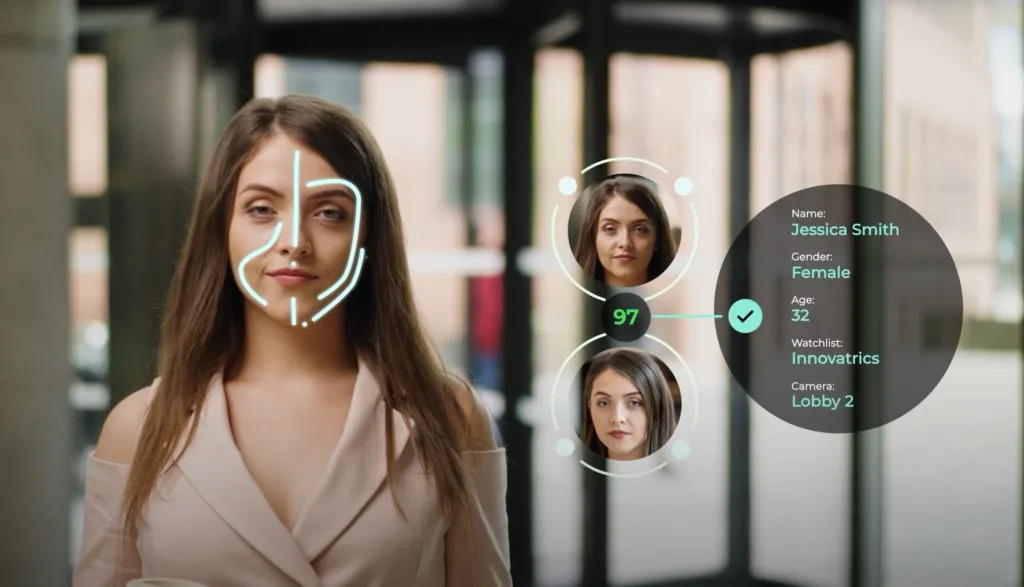
This is especially useful in biometric security, digital onboarding, remote identity verification, workforce access, customer authentication, and fraud prevention. A face, fingerprint, iris, palm, or other biometric trait can help verify that the person requesting access is not simply using stolen credentials.
Biometrics should not be treated as a magic key. A biometric characteristic is not recognized as an authenticator by itself. It requires a physical authenticator to be authenticated along with the biometric comparison, where the device serves as something the user has and the biometric match serves as something the user is.
This is a good fit for Zero Trust. A secure mobile device, a cryptographic authenticator, biometric authentication, and risk based access checks can work together. The system does not rely on one signal. It combines signals to make a better decision.
Liveness detection is also important. A face match alone may not prove that a real person is present. Attackers may try photos, masks, screen replays, deepfakes, or injected video. Liveness detection checks whether the biometric sample comes from a live person during the session.
What are Zero Trust Industry Applications?
Banking and Financial Services
Banks need to protect accounts, payments, credit applications, trading systems, customer records, and internal tools. Zero Trust helps banks apply stronger checks when risk rises. A customer checking a balance may need normal authentication. A customer opening an account, changing account ownership, or approving a large transfer may need document verification, biometric authentication, liveness detection, device checks, and fraud scoring.
For staff, Zero Trust can restrict access to customer data based on role, branch, task, and session risk. A call center agent may view only the records needed for a support case. A privileged administrator may need extra authentication and time-limited access to sensitive systems.
Telecommunications
Telcos manage SIM registration, subscriber records, billing platforms, network operations, and partner access. SIM swap fraud and fake registrations can cause real harm. Zero Trust supports stronger identity proofing during onboarding and tighter access control for internal systems. A telco can require identity verification during SIM registration, then apply least privilege to staff tools that handle subscriber data.
Government Digital Identity
Governments manage civil registries, voter rolls, passports, benefits systems, tax records, border systems, and law enforcement platforms. These systems often need strong identity proofing and strict separation of duties. Zero Trust helps agencies move from broad network trust to resource-level decisions.
Healthcare
Healthcare systems hold sensitive patient records and support time critical work. Zero Trust can help balance care speed with privacy. A doctor may need immediate access to a patient chart during treatment. A billing worker may need only insurance details. A third party lab may need access to one result set, not the whole medical record.
Zero Trust also helps protect remote consultations, patient portals, clinical systems, and connected medical devices. The model works best when policies are practical. Emergency care cannot be blocked by unnecessary friction, but access to sensitive data still needs verification, logging, and review.
Travel, Border Control, and Aviation
Airports and border agencies depend on identity checks, watchlist screening, staff access control, and passenger facilitation. Zero Trust can protect the systems behind eGates, visa processing, airline operations, and border management. Biometric verification can confirm a traveler against a passport or enrolled identity, while policy controls limit which officers, systems, or partner agencies can access sensitive records.
Enterprise and Cloud Environments
Modern enterprises run email, HR, finance, customer relationship management, developer tools, cloud consoles, data warehouses, and collaboration platforms across many providers. Zero Trust gives them a way to manage access without assuming that the office network is safe. A sales employee, contractor, software workload, and automated service account can all be checked against policies before reaching data.
What are the Risks and Limitations of Zero Trust?
Zero Trust can fail when it becomes a slogan instead of an operating model. Buying a tool is not enough. Teams need policies, asset inventories, identity governance, monitoring, user education, and incident response.
Poorly designed Zero Trust can frustrate users. Too many prompts can lead to workarounds. Weak policies can create a false sense of safety. Missing asset data can leave important systems outside the model. Legacy applications may not support modern authentication. Service accounts can be forgotten. Privileged accounts can keep too much access.
Biometrics also need careful handling. Biometric data is sensitive because it is connected to the body and identity of a person. Systems should protect templates, limit retention, use secure storage, and comply with privacy laws. Accuracy must be tested for the real population and environment. Liveness detection should be used where remote verification is exposed to presentation attacks or deepfake attempts.
Zero Trust is a strong direction, not a finish line. It needs ongoing tuning as threats, users, devices, regulations, and business processes change.
How can an Organization Start with Zero Trust?
Start by mapping what matters. Identify users, devices, applications, workloads, data stores, APIs, and the most sensitive business processes. High-value resources should be prioritized.
Strengthen identity next. Use a reliable identity provider, multi-factor authentication, strong account recovery, and role-based access. Remove shared accounts. Review privileged users. Link accounts to real people or verified services.
Add device trust. Managed devices should meet security baselines such as encryption, current updates, endpoint protection, and secure configuration. Unmanaged devices should receive narrower access.
Apply least privilege. Users and services should get the minimum access needed. Access should expire when no longer needed. Privileged sessions should be logged and reviewed.
Protect data directly. Classify sensitive data. Encrypt it. Monitor movement. Apply policies based on data sensitivity rather than only network location.
Use step up verification where risk increases. A password may be enough for a low risk task. A payment approval, account recovery, high value data export, or remote onboarding flow may require stronger proof such as phishing resistant authentication, biometric verification, or liveness detection.
 Fingerprint Recognition
 Facial Recognition
 Iris Recognition
 Contactless Palm Recognition
 Biometric Face Verification
 Age Estimation
 Liveness detection
 Deepfake Detection
 Identity Document Verification
 NFC Verification