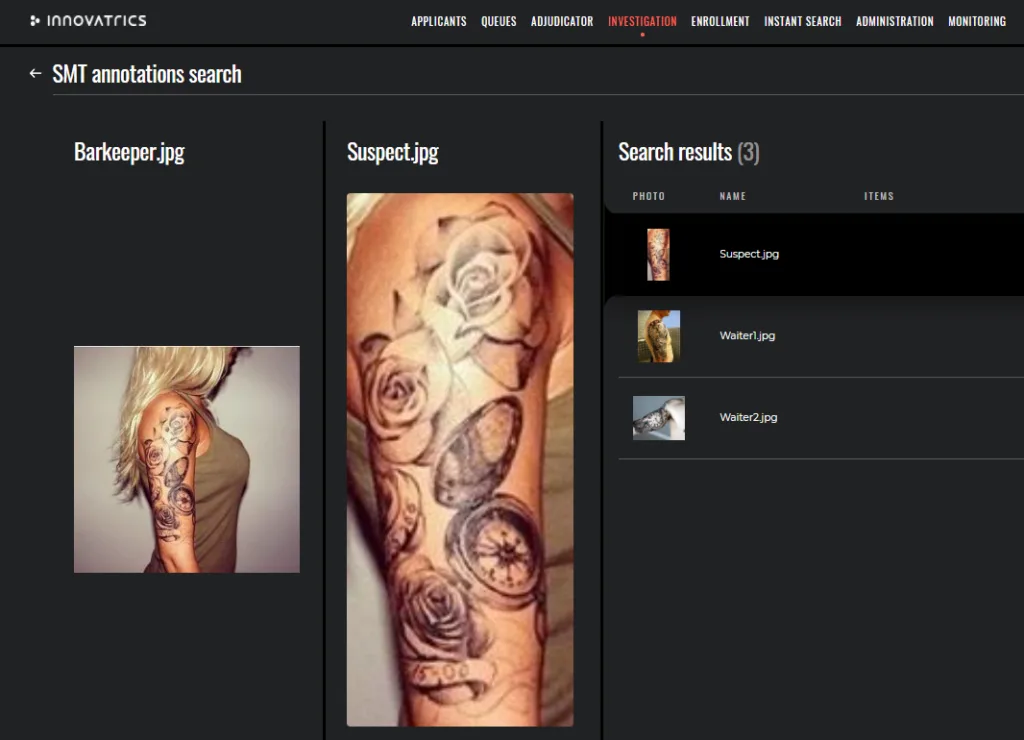
Soft Biometrics refers to observable human attributes that help describe a person or narrow down identity but do not have enough distinctiveness and permanence to identify someone on their own. Typical examples include age range, sex, height, build, hair color, skin tone, clothing, tattoos, glasses, gait, and other visible or behavioral cues.
In biometric systems, these traits are usually derived from a primary biometric sample such as a face image, video stream, voice sample, iris image, or fingerprint, then used to support search, filtering, operator review, or matching accuracy rather than replace primary biometrics such as face, fingerprint, iris, or palm recognition.
What are Soft Biometrics?
In security, the term sounds softer than it is. It does not mean weak security or second-rate science. It means descriptive traits that are useful, readable, and often easy for people to understand, yet not reliable enough to serve as a full identifier by themselves. The phrase itself was introduced in academic biometrics literature in 2004. The broader idea goes back much further. Nineteenth-century anthropometric identification systems already used visible human descriptors such as height, eye color, beard, scars, and body proportions to describe individuals. Modern soft biometrics turns that old descriptive logic into machine-readable data that can assist automated systems.
That matters because most real security environments are messy. People move quickly. Cameras are not always perfectly placed. Lighting changes. A person may wear glasses one day and a hat the next. A biometric system still needs to make sense of that environment. Soft biometrics helps by adding descriptive context around a primary match or around a search event. It gives systems and human operators another layer of information to work with when a clean, high-quality primary biometric sample is not guaranteed.
How are Soft Biometrics Different from Primary Biometrics?
Primary biometrics are chosen because they are comparatively distinctive and stable. Fingerprints, iris patterns, face templates, and palm features are used to recognize or verify identity with a much higher level of certainty. Soft biometrics sits beside that. A system may estimate that a subject is tall, older, wearing glasses, and dressed in dark clothing, yet many people could fit the same description. That is why soft biometrics works best as supporting evidence. It can reduce search space, enrich a watchlist alert, or improve matching decisions. It should not be treated as the final proof that a person is who the system thinks they are. This distinction is especially important in access control.
Opening a secure door, allowing entry to a server room, or clearing a person for a restricted area requires confidence. Soft biometric traits can help the system work faster or make operator review easier. They are not a safe replacement for a strong face, fingerprint, palm, or iris comparison. In other words, soft biometrics is useful because it supports identity. It is not an identity by itself.
Which Traits Count as Soft Biometrics?
The category is broader than many people expect. Researchers commonly group soft biometric traits into several families. Demographic traits include age, sex, ethnicity, hair color, eye color, and skin tone. Anthropometric traits cover measurable aspects of face and body geometry, including height and proportions. Medical or condition-based traits can include wrinkles, skin lesions, body mass indicators, or other visible cues. Material and behavioral traits include clothing color, shoes, hats, glasses, scars, masks, tattoos, gait, accent, and speech-related features. Some of these traits come from face images. Others can be extracted from body imagery, gait sequences, voice, iris images, fingerprints, or hand images.
That range is one reason soft biometrics matters in the access control industry. A person entering a building may present a strong face or palm sample, but the system or operator may also care about contextual descriptors around that event. Was the person wearing glasses or a mask? Is the estimated age broadly consistent with the enrolled profile? Does the clothing match a recent incident report? Is a height estimate useful when reviewing CCTV footage from another angle? None of those signals replaces biometric matching. They make the scene more searchable and easier to interpret.
Can Soft Biometrics Identify a Person on their Own?
Usually, no. That point is central to the definition. The foundational literature describes soft biometric traits as helpful because they provide some information about the individual, yet they lack the distinctiveness and permanence needed to differentiate people uniquely and reliably. A single trait, or even a few traits, may narrow the field dramatically. It still does not give the same assurance as a primary biometric comparison. A security team that treats clothing color or estimated age as identity proof will eventually run into false matches, missed matches, or both.Soft biometrics can still have real operational value.
The 2004 Jain, Dass, and Nandakumar paper found that supplementing a fingerprint system with soft traits such as gender, ethnicity, and height improved recognition performance by about 5% on their test set. That number should not be treated as a universal benchmark for every system or every modality. It does show the principle clearly. Good contextual data can improve system behavior when it is fused carefully and tested for the actual use case.
What are the Benefits of Soft Biometrics?
The biggest benefit is context that people can actually read. A human operator understands “tall person in a dark jacket with glasses” immediately. Soft biometrics can also be extracted from lower-quality samples that may be insufficient for a clean primary biometric match. It is often computationally lighter than full primary feature extraction. In surveillance and security settings, it can sometimes be captured from a distance or without active subject cooperation, which is one reason it has become important in video analytics, forensics, and search workflows.
There is also a practical benefit in mixed environments where one modality is strong and another is weak. A face image may be enough to estimate age range, glasses, or hair color even if it is not ideal for a high-confidence identification. A body image may support height or clothing descriptors even when the face is partly occluded. That makes soft biometrics useful in layered security workflows, especially when speed matters and security teams need to decide what deserves immediate attention.
What are the Risks and Limitations of Soft Biometrics?
Soft biometrics has real limits. Many of its traits change over time. Clothing changes every day. Hair color changes. Glasses come on and off. Age estimates drift. Body proportions can look different across camera angles, lenses, and lighting. Even traits that feel stable can be hard to classify consistently. The literature points out challenges around unclear categories, differences between human annotators, computational limits, sensor attacks, and the ongoing problem of deciding which soft attributes are actually useful for a given application.
Bias and unequal performance are also serious concerns. Soft biometrics often involves inferring demographic or appearance-related traits from images. NIST reports that the majority of tested face recognition algorithms showed demographic differentials, and its FRTE materials continue to summarize how error rates can vary by age, sex, and race. That does not mean all systems perform badly or equally. It does mean any security team using appearance-based inference needs careful testing, representative data, and ongoing performance review before deploying at scale. In access control, these issues are not abstract. A false reject can slow an employee at a gate. A false positive in identification can put the wrong person under scrutiny.
Privacy is the other major pressure point. Research on soft-biometric privacy notes that attributes such as age, gender, and ethnicity can be extracted automatically from biometric data, sometimes without the user’s agreement. The same work highlights risks such as profiling, linking databases, identity theft, and information leakage beyond the purpose for which the biometric was originally collected. Soft biometrics may be less distinctive than a face template or fingerprint, yet it can still reveal sensitive information about people. That is why design choices around data minimization, retention, access control, and transparency matter so much.
Are Soft Biometrics Personal Data?
In practice, they often are. If a soft biometric attribute is attached to a person, event, watchlist record, or searchable video segment, it can function as personal information. The legal status depends on context, jurisdiction, and purpose. ICO guidance says biometric recognition uses personal information, biometric data, and special category biometric data when the purpose is to uniquely identify someone. It also states that organizations using biometric recognition need a lawful basis and a separate condition for processing special category data. So even when a soft biometric field looks simple, like age band or sex estimate, the governance around it cannot be casual if it sits inside a biometric recognition workflow.
The EU regulatory direction moves in the same direction. The AI Act’s Annex III lists biometric categorization systems that infer sensitive or protected attributes as high-risk AI systems, where permitted by law. That does not outlaw every use of soft biometrics. It does raise the bar for justification, risk management, documentation, and oversight. For the access control industry, the message is clear. Use only the attributes you really need. Be specific about the purpose. Test accuracy in the real environment. Give people meaningful notice where the law requires it.
Where do Soft Biometrics Fit in Modern Security Systems?
Soft biometrics is best understood as a support layer in a larger biometric stack. It is useful in biometric access control, visitor management, forensic search, watchlist screening, and surveillance review. It helps connect machine outputs with human descriptions. Also, shrink the search space in large databases. It helps security teams work with imperfect images instead of pretending every camera view will be ideal. What it does not do is replace strong biometric matching, liveness detection, sound policy, or human judgment.
 Fingerprint Recognition
 Facial Recognition
 Iris Recognition
 Contactless Palm Recognition
 Biometric Face Verification
 Age Estimation
 Liveness detection
 Deepfake Detection
 Identity Document Verification
 NFC Verification