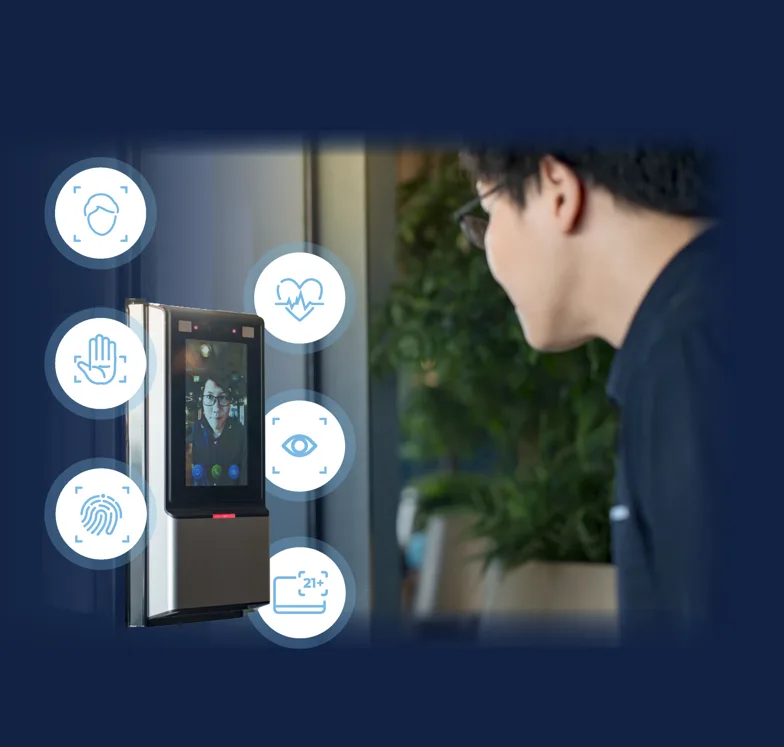
In the evolving landscape of biometric technology, hybrid biometrics has emerged as a transformative approach that combines multiple biometric modalities to enhance security, accuracy, and user convenience. For governments and businesses aiming to implement cutting-edge identity verification and access control solutions, understanding hybrid biometrics is crucial.
What is Hybrid Biometrics?
Hybrid biometrics refers to identity verification architectures that combine multiple biometric modalities, such as fingerprint, face, iris, or palm, in flexible, mixed-deployment environments. A hybrid biometric system can process and match biometric data both on-premise (locally, at the edge) and in the cloud, depending on operational requirements, connectivity, security policy, or data sovereignty laws.
The term “hybrid“ carries two distinct but often overlapping meanings in the field: multimodal hybridization (combining different biometric traits for higher accuracy) and infrastructure hybridization (blending cloud and on-premise processing). Modern enterprise and government deployments typically embrace both dimensions simultaneously.
Unlike traditional biometric systems that rely on a single modality, hybrid biometrics combine multiple biometric traits to improve recognition accuracy, reduce false positives and false negatives, and provide greater resilience against spoofing and fraud.
Why is Hybrid Biometrics Important?
Hybrid biometrics is important because it addresses the limitations of unimodal biometric systems. Single biometric methods can suffer from issues such as:
Environmental Sensitivity and Sensor Performance
The accuracy of certain biometric sensors can be drastically affected by ambient conditions. For instance, poor or inconsistent lighting, reflections, or extreme weather can severely degrade the performance of facial recognition systems. Similarly, moisture or dirt can interfere with fingerprint and iris scanners.
Physical Changes and Intra-Class Variation
Biometric traits are not always perfectly stable. Cuts, abrasions, or chemical exposure can temporarily obscure fingerprints. Facial features change over time due to aging, weight fluctuation, or the presence of accessories like glasses. These physical changes can lead to legitimate users being denied access, a problem known as false rejection.
Vulnerability to Spoofing or Presentation Attacks
Unimodal systems are often easier to fool with presentation attacks. A high-quality photo can potentially spoof a basic facial recognition system, while a molded prosthetic or gelatin cast can spoof a single-factor fingerprint scanner. As spoofing techniques become more sophisticated, single-factor systems are increasingly at risk.
User Convenience, Accessibility, and Enrollment Failures
Not every individual can successfully enroll in or use a specific biometric modality. For example, some people may have unreadable fingerprints due to genetics or profession (e.g., manual labor), or medical conditions may prevent the successful capture of an iris pattern. A single modality introduces accessibility challenges and limits the universality of the system.
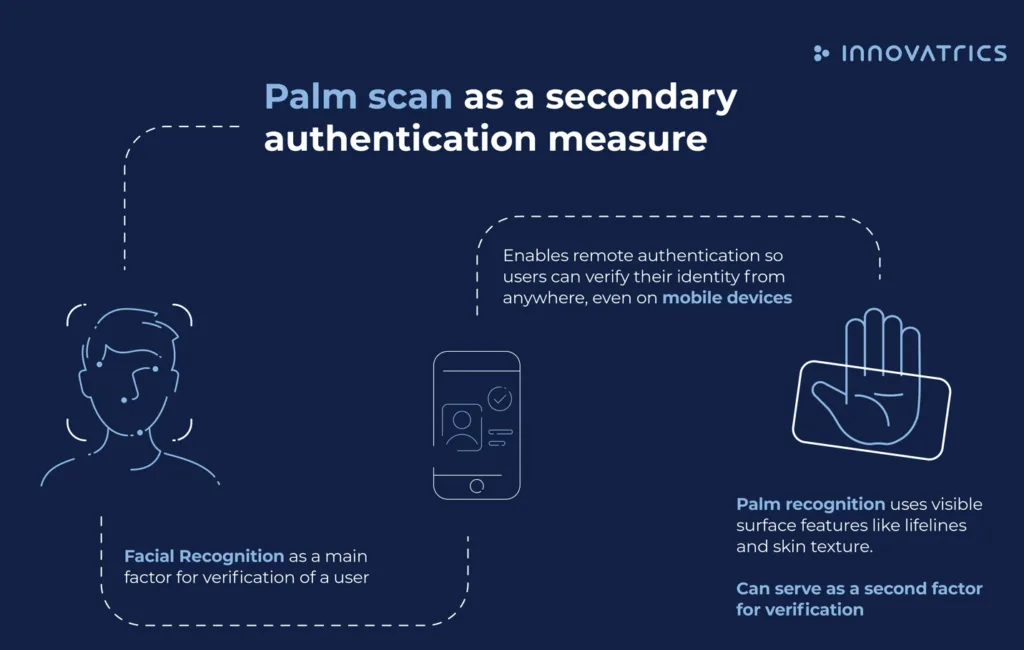
By combining modalities such as fingerprint with iris, face with voice, or palm vein with fingerprint, hybrid biometrics leverages the strengths of each method while compensating for individual weaknesses. This leads to higher security standards, enhanced user experience, and broader applicability across diverse operational environments.
How a Hybrid Biometric System Works?
A hybrid biometric pipeline typically flows through five sequential stages. Understanding each stage is essential for procurement teams and solution architects evaluating vendors.
Capture & Quality Assessment
Biometric data like face images, fingerprint scans, and iris photos are captured via sensors, cameras, or mobile devices. Image quality assessment algorithms instantly evaluate whether the sample is usable. Only samples that meet defined quality thresholds proceed.
Liveness Detection
Before any matching occurs, passive or active liveness detection confirms the sample is from a real, live person. This layer is the primary defense against presentation attacks, printed photos, video replays, deepfakes, and 3D masks.
Feature Extraction
Biometric algorithms extract unique feature vectors (templates) from the raw biometric samples. These compact mathematical representations, not the original image, are what get stored and compared, protecting individual privacy.
Fusion and Matching
In a multimodal biometric system, the extracted templates from different modalities are submitted to independent matchers. Each matcher produces a similarity score, and the fusion algorithm combines those scores into a single identity confidence value improving accuracy beyond what any single modality achieves alone.
Decision and Audit
The system issues a binary or scored decision (match/no-match/inconclusive) and logs the transaction for auditability. In hybrid infrastructure deployments, some steps execute on-device (low-latency, offline-capable), while others pass through secure cloud infrastructure for deduplication against national databases.
What are the Benefits of Hybrid Biometrics for Governments and Businesses?
For governments and businesses, hybrid biometrics offers key advantages:
Improved identity verification: Ensures accurate authentication for border control, law enforcement, social services, and corporate access.
Enhanced user experience: Reduces authentication friction by offering multiple verification options suitable for different user scenarios.
Operational flexibility: Hybrid systems can be tailored to specific use cases, whether for large-scale population management or secure facility access.
Compliance readiness: Meets stringent regulatory requirements for data protection and privacy with multi-layered security.
Scalability: Supports integration across various platforms and scales from small enterprises to national ID programs.
Common Use Cases of Hybrid Biometrics
National ID and Border Control
Hybrid biometrics enables secure and efficient identity verification at border checkpoints and national ID enrollment, reducing identity fraud and enhancing traveler throughput.
Financial Services
Banks and financial institutions use hybrid biometrics for secure customer onboarding, transaction authentication, and fraud reduction.
Healthcare
Protect patient identity and access to sensitive medical records while ensuring efficient service delivery.
Corporate Security
Facilitates secure employee access to facilities, devices, and sensitive information, supporting zero-trust security models.
Law Enforcement
Supports criminal identification and forensic investigations by combining multiple biometric data sources.
Hybrid biometrics is revolutionizing identity verification by combining multiple biometric traits to deliver superior security, accuracy, and user convenience. For governments and businesses committed to advancing their biometric capabilities, understanding and adopting hybrid biometric solutions is essential. Embracing hybrid biometrics not only strengthens identity protection but also paves the way for more efficient and reliable authentication across diverse applications.
 Fingerprint Recognition
 Facial Recognition
 Iris Recognition
 Contactless Palm Recognition
 Biometric Face Verification
 Age Estimation
 Liveness detection
 Deepfake Detection
 Identity Document Verification
 NFC Verification