NFC Verification definition
NFC Verification (Near Field Communication Verification) stands as the gold standard in identity document authentication, offering the highest level of assurance by securely reading cryptographically protected data directly from an electronic identity document’s embedded chip.
What Is NFC Verification?
Near Field Communication or NFC is a technology that allows wireless data transfer over short distances. The data is usually stored on an encrypted chip, and part of the NFC technology involves ensuring that the chip is genuine, not forged.
NFC Verification is a highly secure, contactless method of authenticating the legitimacy of an electronic identity document (eID) and the identity of its holder. This technology provides a high level of certainty in verifying the authenticity of electronically enabled identity documents, such as e-passports, e-ID cards, and e-driver’s licenses. It delivers 100% proof that the document is genuine and has not been altered since it was issued.
How Does NFC Verification Work?
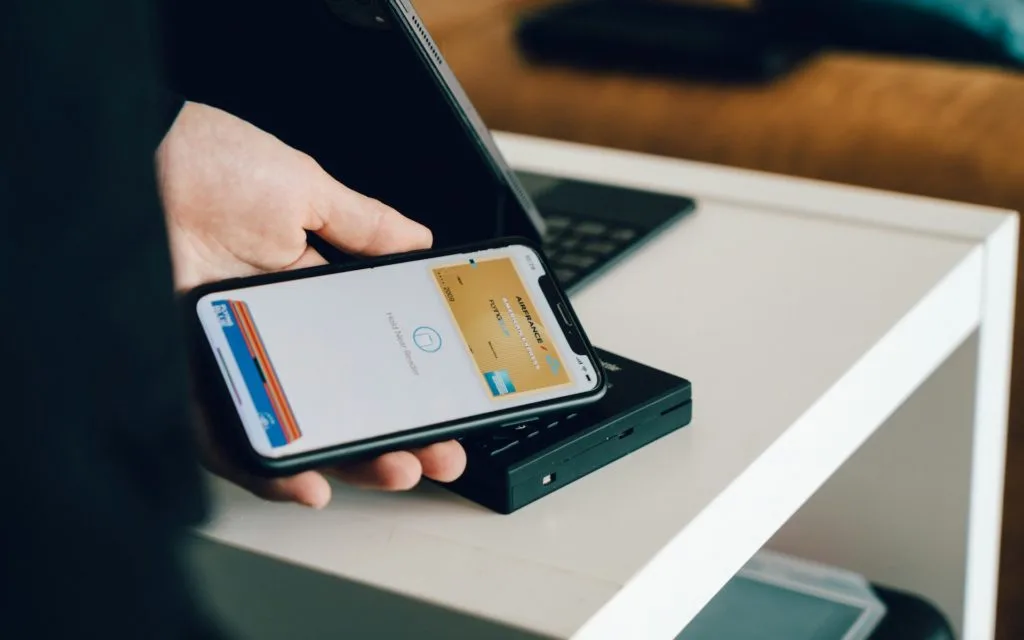
The NFC verification process combines multiple security layers to ensure document authenticity and data integrity. When an NFC-enabled smartphone is positioned near an identity document’s chip, the system establishes a secure connection using access control protocols.
For biometric passports, the verification reads the Machine Readable Zone (MRZ) to obtain the access key that unlocks the chip’s encrypted data. This data includes the document holder’s biographical information, biometric photograph, and in some cases, fingerprints or iris scans. The system then validates each data element’s cryptographic signature against the issuing country’s public certificate, confirming both the chip’s authenticity and data integrity.
Modern NFC verification implementations also incorporate passive and active authentication mechanisms. Passive authentication verifies that the chip data hasn’t been modified since issuance, while active authentication confirms the chip itself is genuine and not cloned. This dual-verification approach provides comprehensive protection against sophisticated fraudulent attempts.
Steps on NFC Verification
- Initiation and OCR Capture: The user uses an NFC-enabled smartphone (via a mobile app) to photograph the identity document. The system uses AI-powered Optical Character Recognition (OCR) to automatically read the MRZ and extract the necessary access data.
- Basic Access Control (BAC): Using the extracted MRZ data as the Access Key, the system initiates Basic Access Control (BAC). This establishes a cryptographically secured and encrypted communication tunnel between the reader device and the eID chip.
- Data Extraction and Passive Authentication (PA): The system securely reads the biometric and biographic data stored on the chip. It then executes Passive Authentication (PA), which verifies the digital signature of the issuing government authority. If the signature is valid, it confirms that the data has not been modified since the document was issued, thus authenticating the chip’s contents.
- Active Authentication (AA) / Chip Authentication (CA): As an even higher layer of security, the system may perform Active Authentication (AA) or Chip Authentication (CA). This is a challenge-response protocol that proves the chip is not a cloned copy. The chip must prove possession of its unique private key, which is virtually impossible for a fraudster to replicate.
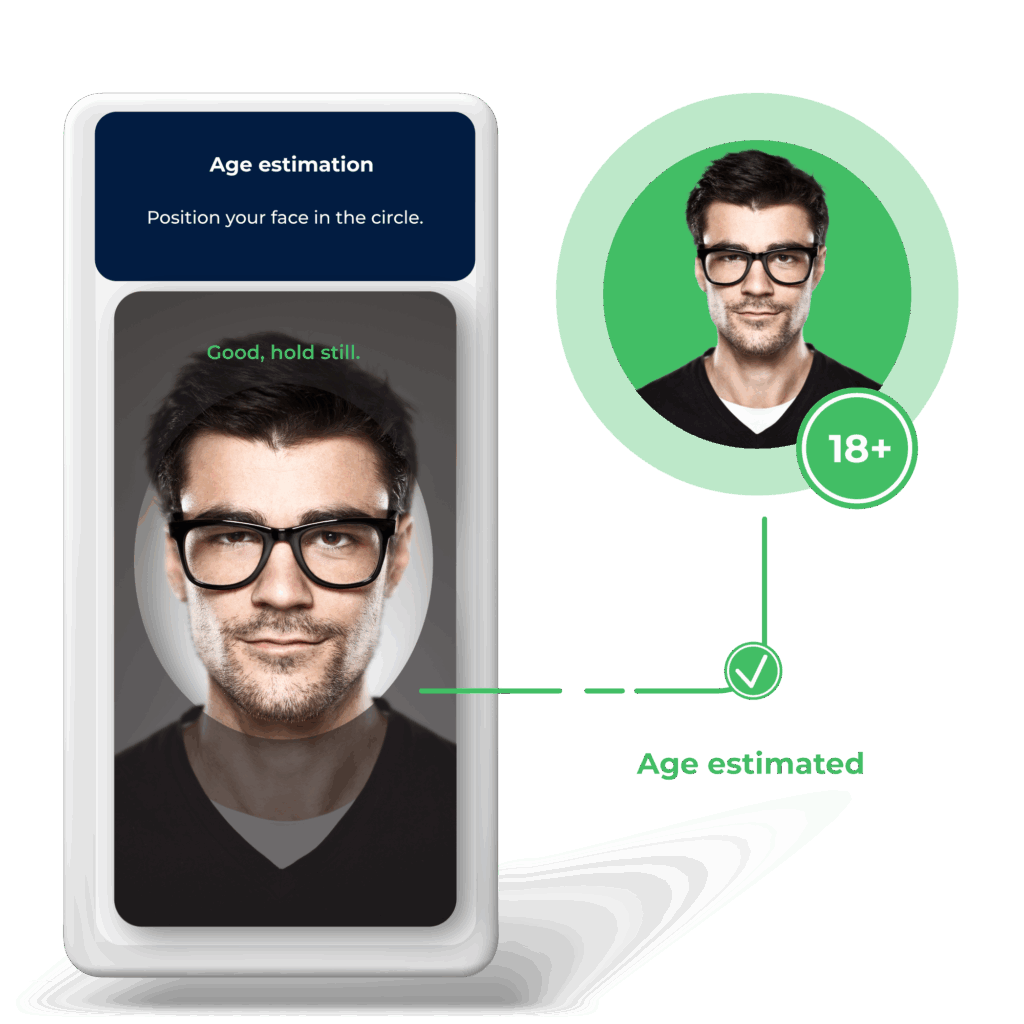
- Biometric Holder Verification: The high-resolution facial image extracted from the chip is compared against a live selfie captured from the user. This 1:1 Face Verification is coupled with Liveness Detection to confirm the person presenting the document is the rightful, physically present owner and not a fraudster using a photo, video, or deepfake.
What Are the Key Benefits of NFC Verification?
Organizations implementing NFC verification gain significant advantages across security, user experience, and operational efficiency. The technology delivers a high level of assurance without requiring specialized hardware, only an NFC-enabled smartphone and a compatible identity document.
Security Excellence
By accessing cryptographically secured data directly from the chip, NFC verification eliminates vulnerabilities associated with optical document scanning. The technology defeats even advanced forgeries, as fraudulent documents cannot replicate the encrypted chip authentication process.
Superior Data Accuracy
Information extracted via NFC is error-free, as it comes directly from the issuing authority’s database rather than through optical character recognition (OCR). This eliminates transcription errors and ensures data integrity throughout the verification workflow.
Seamless User Experience
The entire verification process completes in seconds, requiring users only to hold their smartphone near their document. This frictionless approach increases conversion rates during digital onboarding while maintaining maximum security standards.
Regulatory Compliance
NFC verification helps organizations meet stringent Know Your Customer (KYC) and Anti-Money Laundering (AML) requirements by providing verifiable proof of identity document authenticity and establishing the genuine presence of document holders.
What Documents Support NFC Verification?
NFC verification works with any Machine Readable Travel Document (eMRTD) containing an embedded RFID chip that follows International Civil Aviation Organization (ICAO) Doc 9303 standards. This includes:
- Electronic Passports (e-Passports): The most widely adopted NFC-enabled document globally, with billions issued worldwide
- National Electronic ID Cards (eIDs): Increasingly common as countries modernize their identification infrastructure
- Electronic Driver’s Licenses (e-DLs): Growing in adoption as regions digitize licensing systems
- Electronic Residence Permits: Used for immigrant and temporary resident verification
The global adoption of NFC-enabled documents continues to accelerate, with most developed nations now issuing electronically enabled identity documents as standard. This expanding ecosystem makes NFC verification increasingly viable as a primary authentication method for digital services.
What Industries Benefit Most from NFC Verification?
Multiple sectors leverage NFC verification to strengthen security, streamline operations, and enhance customer trust:
Financial Services
Banks and fintech platforms use NFC verification for secure customer onboarding, satisfying regulatory requirements while preventing fraud. The technology enables same-day account opening with confidence in customer identity.
Telecommunications
Mobile network operators implement NFC verification to combat SIM swap fraud and ensure compliance with subscriber identity regulations, protecting both customers and networks from identity-based attacks.
Government Services
Public sector agencies use NFC verification for citizen service delivery, benefit distribution, and secure access to government platforms. The technology’s high level of authentication makes it ideal for sensitive applications.
Healthcare
Medical facilities employ NFC verification to accurately identify patients, prevent medical identity theft, and ensure proper insurance verification, protecting both patient safety and organizational revenue.
Travel and Hospitality
Airlines, hotels, and border control agencies leverage NFC-enabled e-passports for rapid passenger processing, automated border gates, and secure guest verification.
How Easy Is It to Implement NFC Verification?
Modern NFC verification solutions prioritize straightforward integration, enabling organizations to deploy a high level of authentication without extensive development resources. Most implementations follow a software development kit (SDK) model that integrates into existing mobile applications or web platforms through well-documented APIs.
The technical requirements are minimal: users need only an NFC-enabled smartphone running current iOS or Android versions capabilities present in the vast majority of modern devices. No additional hardware, specialized readers, or proprietary equipment is necessary, dramatically reducing deployment costs and complexity.
Leading verification platforms prioritize rapid deployment. They offer comprehensive developer documentation, code samples, and technical support, allowing organizations to typically complete integration and testing within days, not months. Furthermore, these platforms include seamless fallback mechanisms for documents or devices that are not NFC-enabled.
What Are the Future Trends in NFC Verification?
The NFC verification landscape continues to evolve as countries expand digital identity infrastructure and organizations recognize the technology’s security advantages. Several key trends are shaping the market:
Universal Adoption
As more nations issue NFC-enabled identity documents, the percentage of the population carrying compatible credentials approaches universal coverage in developed markets. This makes NFC verification increasingly practical as a primary authentication method rather than a supplementary option.
Mobile Driver’s Licenses
Governments are beginning to pilot and deploy mobile driver’s licenses (mDLs) that incorporate NFC technology. This initiative extends the benefits of cryptographically secured digital identity beyond passports to everyday identification scenarios.
Enhanced Privacy Controls
Emerging standards enable selective disclosure, allowing users to prove specific attributes (such as age verification) without revealing unnecessary personal information, addressing privacy concerns while maintaining security.
Integration with AI and Multi-Modal Verification
Future NFC verification will be integrated into a sophisticated, multi-layered security architecture driven by Artificial Intelligence (AI). This AI-powered orchestration will analyze risk indicators, such as the user’s device fingerprint and network location, to instantly determine the necessary level of verification. For low-risk activities, a straightforward NFC read and liveness check will be sufficient. Conversely, high-risk financial operations may necessitate a more robust approach, combining NFC Verification with Face Match and Active Authentication.
Organizations implementing NFC verification today position themselves at the forefront of secure digital identity, with infrastructure that will support evolving authentication requirements for years to come. As identity fraud grows more sophisticated and regulatory requirements strengthen, NFC verification’s cryptographic security foundation ensures it will remain the most trusted method for remote document authentication.



